Muse Journal

Tag: music

  • The Great South African Vibes: SA’s Pop Music Culture Goes Global [Part 2]

    5–8 minutes

    What’s a fitting continuation of the story of South African pop music culture? A genre that pays homage to two native sounds and brings them together into a new subgenre that takes over international soundwaves. The rise of Amapiano is an interesting case study, once a genre that brewed in the backyards of townships to a multi-million rand music economy.

    In a way true to homegrown creations, Amapiano’s potential could not be placed within a box. I remember my first true encounter with Amapiano, before it was charting radio station airwaves back in 2019. I was in high school and we had just had an inter-house swimming gala and a group of grade 10s gathered to *discretely* use the school speakers to enjoy the last few minutes with it. I would never gather in a circle where people are dancing, I am painfully socially anxious [winning that battle though] so it’s important to point out that this opened circle came to where I was sitting, I did not follow it. One of the biggest songs of the Amapaino boom was playing: “Labantwana Ama Uber” (Semi Tea feat. Miano and Kammu Dee) and probably the most rhythmic dancer I had ever laid eyes on was glowing through the sound of what I was hearing, skillfully using her body to transport the music through her body, moving with a silkyness as though the music was water that she was swimming through. I knew South Africans can dance, I had a cousin who was a majaivane (colloquial term for dancer), but seeing a rhythmic exercise like this, witnessing that people can dance LIKE THIS to songs that sound THIS GOOD? This was a new dispensation, a discovery.

    As someone who isn’t into dance culture, this new dance music sound appealed to me. The appeal was not necessarily in how it moved the people, it was in how the music gave me the right to think who I naturally am, and where I come from is cool. The effects of colonialism and oppression on the black psyche still raging on two decades after the end of Apartheid; the places where we come from, our natural expression, and our experiences and situations were termed “ghetto,” as a derogatory tool to shame our own kind, and all of us drank the Kool-Aid. There wasn’t anything “cool” about being from a township; the aspiration to wealth or the perception of it had crept into South Africa, and even in Primary School, we got teased and laughed at if you said you lived in or came from a township while attending an English & Afrikaans School (the so-called “better schools”). As if the failure to achieve upward economic mobility was a moral failure on the part of the previously disadvantaged. Anyway, Amapiano made real black culture cool again; it made us return to ourselves.

    Characterized by a blend of deep house, kwaito, jazz, and lounge music, with original, distinctive percussion basslines known as “log drums”, Amapiano is a native South African genre owned and created by young black South Africans. Its pioneers include MFR Souls, MDU aka TRP, Kabza De Small, DJ Maphorisa, and Calvin Fallo, who are among the key influential figures who are consistently recognised as artists who helped define the genre. Most have described it as a confluence of Kwaito & House Music and is often categorised as a House subgenre. This is because the music sits on a bedrock of slowed house music while standing on kwaito-style singing and “rapping”.

    Less than 10 years ago, South African streaming charts and radio charts were dominated by international artists; today, South African charts belong to Amapiano. Similar to Kwaito’s impact on the youth of the ’90s, Amapiano’s impact on today’s youth in South Africa is a tale of enormous stature. Not only is it a vehicle of positive self-image and a celebration of who we are, it’s evidence that we have it in us to take our country onto a giant leap of change into greatness. The global community’s nod to what we do and who we are should not be seen as validation for what we already know about ourselves, but it should serve as confirmation that the dream of our self-actualisation is not a far-fetched dream, that it is tangible and truly within reach. The “Amapiano to the world” campaign championed by the artists who make the music and all those who listen to and love the sound is a cultural evolution that young South Africans can use to set the standard for who we decide to become as we chase collective greatness.

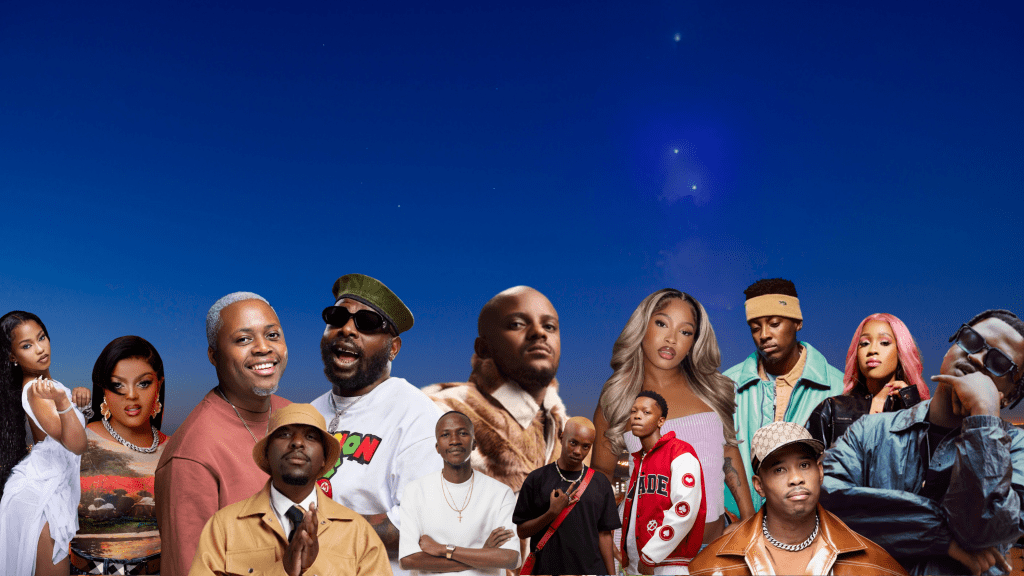
    When we see Uncle Waffles shine on international stages that now carry our sound and our stories, even though they were not created to, South African and Swati children are learning that it doesn’t serve anyone to shrink and not walk confidently into the dreams that once felt impossible. When the likes of Major League DJs and Focalistic build business relationships and collaborate with international acts to further the Amapiano Agenda, it sends a clear picture that South African youth know their worth and are commercially astute to build empires on strong business principles. When Kelvin Momo creates music of such elegant taste that it earns him a cult following of people who aren’t only music lovers but who consider themselves connoisseurs of the type of Amapiano he makes, we all collectively learn that Amapiano’s success isn’t only in how loud one can be about their art, but also about that quiet excellence that makes one great. When the likes of Mas Musiq, Mellow & Sleazy, DBN Gogo, Pabi Cooper, and Zee Nxumalo create hits with the kind of excellence that comes from the child-like joy of doing what you love, we learn that achieving greatness doesn’t have to be a draining exercise; it can be a freeing one. When guys like De Mthuda, MDU aka TRP & Stokie create blissful sounds quietly and through consistent hard work and trained talent, we learn that indeed one’s talent truly makes room for them in the presence of kings, and that talent speaks for itself. And finally when artists like Kabza de Small and DJ Maphorisa create with a type of genius and visionary essence that it empowers a generation, we learn that when special moments choose us, the kind of moments that move a culture forward and transform a nation, when those moments choose us, they remind us that we are capable of much more than we can fathom.

    So the next time someone asks me why I love Amapiano so much, I’ll send them this blog post & say to them, Amapiano isn’t just dance music or dance culture, it’s the Sound of a version of South Africa that is ready to actualise the greatness that has always been inside it all this time.

    To close off this week’s post, I’ve attached 10 of my most favourite amapiano song selections, enjoy. x and let me know what you top 10 Amapiano songs are in the comments.

    10. Serurubele, MDU aka TRP

    9. Wa Nsiya, Kelvin Momo & Stixx

    8. Ingabe, Kabza De Small & Spartz

    7. Endaweni Efudumele, Russell Zuma & George Lesley, Soultronixx, Juggernot SA

    6. Ebumnandini, De Mthuda, Njelic, Mkeyz

    5. Awukhuzeki, DJ Stokie, Zee_nhle, Omit ST, Sobzeen

    4. Asibe Happy, Kabza de Small, DJ Maphorisa, Ami Faku

    3. Wamuhle, Slade, Sino Msolo, Tweezy & Yumbs

    2. Sengizwile, Mas Musiq, Aymos & Young Stunna

    1 . Abalele, Kabza De Small, DJ Maphorisa, Ami Faku
  • Committing to New Music & Renewed Goals in 2026

    5–7 minutes

    My life got significantly better when I stopped having a Monday Mindset, when I resolved within myself to be a person who starts things whenever I want to, even if it’s on Thursday afternoon. Most people use this as an argument for why we ought to not have New Year’s resolutions, but I think the momentum that comes with a new year is such an enabler for change when used right. Neuroscience says that change is difficult because our brains are trying to protect us and to maintain what’s familiar. We fail to change because we have not formed the new neural pathways that are conducive to sustaining the new thing we are trying to do. This is why consistency is key when enforcing a change in behaviour – eventually the brain adapts to the newly formed neural pathway, but it takes some concentrated time in the beginning.

    A new year is the perfect motivation and momentum needed to sustain a change, as you unwrap a new year, you can smell the newness in the air for at least 4 months into it, between January and April your brain sees the novelty of the year as an opportunity to become new, forming a relaxed environment for your subconscious, allowing you to believe in your ability to make a lasting change. Each year, I love to grab this opportunity and I try to milk it with all I’ve got. Three of my biggest goals for the year is:

    1. To make a conscious effort to listen to new music and update my personality or atleast, my taste in music.
    2. To act out my love and to stop loving with lip service
    3. To continue to build a deeper relationship with myself as I continue to make a home within myself.

    I’ve seen how listening to the same music can box you into a certain experience or certain thoughts. Each time I play Zoe Modiga’s ‘UTHANDO’, it takes me back to my matric prelims because it was one of the songs that got me through that period. Sound is powerful because it can transport you to specific memories and make you relive them. I have recycled many memories, many thoughts and many states of being with the music I’ve listened to, so this year I’m choosing to find the parts of me that colour outside the lines. I’ve let my love for Jazz prohibit me from exploring some hip-hop influences, I’ve felt so safe within Afro Soul for so long that I have neglected my appetite for new House sounds, but this year I’m choosing to love what I love while exploring what I may fall in love with. I want new songs to pair with a version of me I’m trying to grow into, the me who’s grown to regulate their social battery enough to want to host friends and family – this version of me needs new background music to cook to and to laugh over a game of Uno with my cousins after we’ve enjoyed a good meal. Loyle Carner is an artist whose music I’ve recently started cooking to, and I think I’ll make awesome meals with his jazzy hip-hop sound as my company.

    I can’t remember a year when I did not have “I want to love better” on my goals list, but this year’s entry comes with a wealth of wisdom that has come with maturing and a refreshing TikTok FYP. Each year, the goal would always seem insurmountable and I’d remain in functional freeze, my social anxiety problems are far bigger than I often let on and I’d always unintentionally isolate and think I can show love from a distance. Always lamenting how much love I have inside of me with nowhere to take it, the healing from this mindset came unexpectedly when @kristen1942 on TikTok explained why behaviour is always more important than intent in relationships. This put into perspective that how I show up for people over time is more important than the feeling of love I claim to hold in my heart for them. I’m ready to love with my presence rather than holding love like it’s a twinkling star in the sky, very beautiful but oh so far. I have had to unlearn perfectionism and rigidity to embrace the art of small, unplanned, and consistent gestures of love. As I seek out more hangouts with my cousins that cost nothing but time, or affection to my parents and siblings through acts of service rather than birthday gifts, I hope to remember to love and live in the present. I also hope to learn to dance comfortably around my friends to songs such as my newly discovered artist Flo Naegeli’s You’re My Baby.

    And as a jazzhead, I want to discover the good golden oldies that are iconic. I’ve always been quite vocal about the kind of jazz that sounds best to me, sharing my deep appreciation for jazz songs that have a memorable melody and that sound like a cohesive songpiece. This has sometimes put me at great odds with the music from the golden jazz icons, who are the greatest of all time, whose music is characterised by improvisation and complex sounds. I think I’m ready to embrace the depth of jazz and to go where it’s not comfortable, maybe I’ll find beauty therein, too. This sense of exploration and adventure symbolises a personal growth milestone of mine where I have taken on a mindset of exploration and curiosity about myself. As someone who’s always longed for emotional closeness and intellectual compatibility, it dawned on me once that the best person to understand me and to share all my intellectual quirks with me is none other than myself. So I will indeed be chasing the things that set me on fire, reading all the books I can to feed my curiosity for certain topics, going to all the events that inspire me, and doing it all with a passionate enjoyment of my solitude. I was listening to Alice Coltrane’s Turiya & Ramakrishna and envisioned myself as a granny in her late 60s, and I thought about the great personal journey within and externally that I would be proud of at my old age. Will I be happy with myself and celebrate having embraced a rich internal life or will I wish to have had more time for and with myself?

    What are you committing to in 2026?

  • Where I Go When The Music Plays

    3–4 minutes

    Try, he said, handing me the paintbrush. I was looking at a blue dolphin drawing that I was meant to recreate. I had watched closely while he was making the painting and had seen that glow in his eyes that always greeted the glow in mine with a certain reverence – I saw that glow and the ease with which he could spill his heart onto paper with any colour, telling any story. I should have been paying attention to the painting itself, how to swirl the outline, the technique he used to make it look so real, instead of being enamoured with his soulfulness.

    And as if I was not already drowning in his eyes, distracted, Sishii’s Levity was like a strong flow of ocean waves, pulling me deeper into the centre of this whirlwind feeling that was working alongside this glass of wine to disorient me. The string arrangement of the song was threading the evening together so beautifully in my mind, lost in thought, I softly reflected on the many events that had to occur so I wouldn’t miss out on this young man’s brilliance. If I had not finished my semester test when I finished it on that day, I would not have met our mutual friend. If I had not decided on that Sunday to go visit the church I had been promising myself to visit over some months, I would not have had the chance to meet him and the endless other things that worked together for this butterfly effect to culminate into this third date.

    I particularly heard nothing he said when this song was playing, and if I was drowning before, Sishii’s voice was now the surfboard that was helping me ride the waves of this evening’s intensity. Was this the ‘meeting of souls’ feeling that those older and wiser spoke of? That “when you know, you know” moment was happening right now? Is this what it feels like to know? There aren’t any angel voices, but that’s fine because Sishii’s voice felt close enough to the sound I thought I’d hear when the angels sing “this is he, given to you by the heavens”.

    I had always believed in love at first sight, maybe not at first sight, but I had always believed it was possible for strangers to know quickly that they are meant to love each other. I never used to know how to articulate my reason for believing this, but one day I discovered a possible inspiration for an argument to make in this case. In Luke 1:41, it speaks of a moment between Elizabeth mother of John the Baptist & Mary mother of Jesus Christ: “When Elizabeth heard Mary’s greeting, her baby leaped in her womb; and Elizabeth was filled with the Holy Spirit and empowered by Him.” The leap is seen as a sign of divine recognition, showing that the unborn John the Baptist acknowledged the presence of Jesus, even before birth.”

    Through this, I understood that something in you can leap in divine recognition of someone standing before you who could be sent by God to love you. So was this possible that, after about 3 weeks, this was a leap of the souls recognizing each other? Side note: Can the other person tell exactly when you fell for them, and does it scare them?

    The truth is, None of this happened.

    There was no third date. No shared glass of wine. No young man glowing across the table from me.

    This night exists only where music plays.

    This is where music takes me.

    When a song like Levity plays, it doesn’t just make a sound that is pleasant; it creates a world within the walls of my mind, it’s directing a movie, telling me a story, a story that is dynamic. And while the lyrics stay the same, the interpretation and application of a song changes as the days of our lives change.

    One of my favourite niche music genres is cinematic music. I hope this song takes you somewhere beautiful as well when you listen.