Muse Journal

Category: 2025

  • The Music That Makes Me A Better Woman

    5–8 minutes

    Nothing feels more South African than turning up those local old-school gems for the whole community to enjoy on the weekend. On our street’s playlist this week was Letta Mbulu and Caiphus Semenya’s ‘Ndi Phendule’, the couple’s most loved hit song. It’s the kind of song that immediately engages your heart and asks it to feel the life on its skin, to bite into the joy of today. In it, Mam’ Letta Mbulu and Ntate Caiphus sing a conversation between lovers, in which the man has just asked for his lady’s hand in marriage and is awaiting her response; hence ‘Ndi Phendule,’ which means ‘answer me’ in isiXhosa. I love Mam Letta Mbulu so much. My deep admiration for her began in 2021 when 19-year-old me rediscovered ‘There’s Music In the Air’. The song was my anxiety cure, my companion during my afternoon decompression sessions after a full day of isolating online lectures in our living room. Recently, my admiration for Mam Letta’s music has been about more than the soothing qualities of her songs; it’s about the experiences of womanhood she writes into her music.

    To be a woman is to constantly ask yourself, “Can I possibly have it all?” It’s to negotiate yourself between what you want and what you can have. I often think of womanhood and femininity as a negotiating force through which the outcomes and possibilities of life are determined. When my mom chooses to use a specific tone instead of another or when she decides what the right time to have a conversation is and how she must curate the environment to suit the type of conversation she wants to have, I see how pivotal women are to margins that shift realities. In ‘Ndi Phendule’, the lady asks the man for more time as she considers his proposal for marriage. A lady must take her time to navigate the delicate dance between options, especially in situations and decisions that are ‘reality-shifting.’ As a Christian woman who loves God’s ways, yet who doesn’t hesitate to ask questions when my natural understanding falls short, it was quite the trip to wrestle with and fully grasp the concept of the submission of women. I was taken on a beautiful journey where the wonder of that ‘submission’ didn’t disturb the feminist in me anymore. This song and the heavy considerations Mam Letta Mbulu confronts in this slow process of deciding to marry, encapsulate my understanding of submission so well now. To submit is not to cede power; it is to give considered agreement to an agenda, perhaps the truly powerful position in a partnership. And in that pause between yes or no; yes or no to the marriage, to the conflict, to the pursuit of the dream – that is where the power lies.

    Ofcourse the true gem of being a woman isn’t in how we can hold communities or families together, it is in how we can learn to finally give ourselves the same love we so freely share with the world. It is not lost on me that in the two most important commandments, the Bible says to love God with all your might & love others as you love yourself. This indicates how important it is to love yourself really well so you can love others just as well too. One of my all-time favourite songs is Lira’s ‘Soul in Mind’. In which she beautifully writes, “I am a child born of love. So let love remain in my heart and my mind. Let love and joy be my friend, give me peace with no end. Let me live with no fear and no shame. Let me begin to see love come alive in my life. Let me feel how it feels to be me…

    “A longing pounding in my heart led me to want so much more out of life. Led me to forgive every hurt, to let go of the past – and allow myself to heal every pain. Now I am free, yes, I hold myself up high. The burden on my shoulder is no longer with me. Now i can breathe, yes, I feel so much at ease, my soul is alright with me. This is a prayer for my soul in mind…” These are the most beautiful lyrics I will ever come across. Being a woman sometimes can feel like a cyclone is approaching an island; emotions and temperaments can flare up so high that one can get caught up in a storm of emotions. Just after turning 20, I had one of those, and I felt completely lost within the corners of my own life. This song by Lira always helps to ground me; it truly is a prayer for my soul, and without fail, it always helps me find my true north. To be human is to lose and find your true north many times over, but to be a woman on this journey is to conjure the necessary internal storms that nourish ancient roots, eventually growing a rainforest of magical wisdom.

    Another one of my all-time favourite songs is Msaki’s ‘Chem Trails’ (feat Caiiro). Msaki is a legendary figure in my books; she signifies a woman who is completely in full ownership of herself. She doesn’t belong to any genre, she is not tied to a single sound, she may be gentle and soothing and gorgeous in all ways, but she is undefinable & unlimited. The first time I heard Chem Trails, on the day it dropped, it was an instant favourite. The kind of song that you know has changed your life in the first 30 seconds you hear it. What I enjoy about Msaki & inadvertently about Chem Trails, is her/its intensity.

    I often feel that one of the best ways to explain the experience of girlhood/womanhood is that you’re like a fire that everyone is trying to keep small. (While we are here, I’d also really love to hear a poetic expression of the experience of boyhood/manhood if someone has one) In trying to keep you small, society later teaches you how to do that by yourself. There are many limitations I haven’t had to grapple with by virtue of being a girl, and for that I thank my family and community; however, I haven’t escaped the greater societal limitations that no woman can be immune to, including but not limited to: when you can walk outside in a city you live in, where you can and can’t go in a city/country that’s your birthright, what you can and can’t wear with your own body etc.

    Msaki’s ‘Chem Trails’ embodies the intensity that rages within me that often feels unacceptable or undesirable. In the song, she writes a really passionate and intense monologue/letter to what seems like a lover. The poetic language used is half the drama, but the song itself, thanks to Caiiro, also feels like the pressure of multiple ocean waves crashing on you and taking your breath away. These are the second most beautiful lyrics I will ever read. The song is freeing to the kind of girls who like to receive love letters but also want to write 3 pages of poetry for a guy they like, for those who want to text first or say I love you first, the queens who feel passionately about a quirky interest, who say what they want, who are ambitious to what feels like a fault to the rest of the world..

    Msaki teaches me to be a woman in the way I want to be a woman, not in a way that’s prescribed by everyone else.
  • 3 years after the breakup, at a cozy bar [February Love Story Series]

    Kemisetso was my home. She was truly a friend for my soul; she was the space I craved when the rest of the world was too claustrophobic. Two weeks ago, I risked it all and asked her if I could return home. I didn’t put it in those exact words; I wish I had enough courage to. In between seeing Kemi on campus and around the streets of our neighbourhood, I had not been able to find the courage within to let her know how much I had been achingly missing her. When we got news that my brother had been arrested, other than wanting to tear down walls and rip my heart out my chest, I also wanted to have Kemi’s weight on top of me, maybe if she had laid her head on my chest and listened to my heartbeat the way she always used to, perhaps then my heart would have had somewhere to go for comfort. All she did during that time was text me to say that she had heard and that she’s sorry for my pain; what did I expect her to do? Drop everything and attend to an ex that abandoned her? The guilt and shame I felt for leaving her the way I did were fortunately not great enough to conquer the desperation I had to hold her in my arms again. The more I ignored the ache of feeling empty without Kemi, the worse it got.

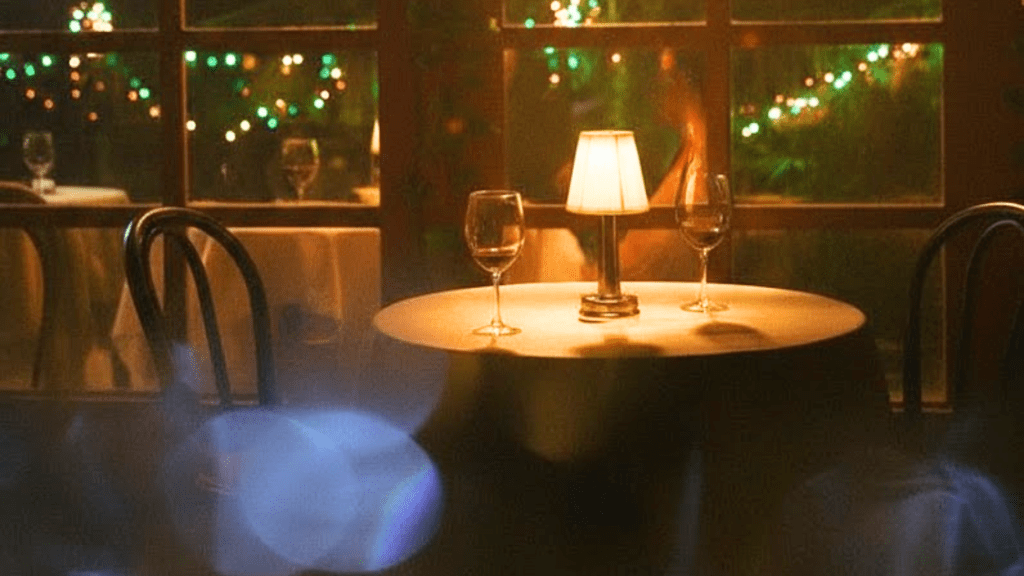
    It wasn’t enough that my chest was sinking into my stomach from all the anxiety I felt about sitting across from the love of my life for the first time in years. The cozy bar we were at made it worse with its somber playlist. Sonder’s ‘Care’ had been my break-up song all those years back; it was the song that anchored my hopes after I called it off. I knew I had made Kemi feel like I did not care for her by walking away, but caring for her is the one thing that comes naturally to me. And this song by Sonder was the only way I could sit between the feelings of disappointment with myself and the feelings of much-needed freedom and relief from our relationship. I used to sing it to constantly remind myself that I really did care for her, despite what the breakup suggested.

    I wanted to go see a therapist, Aus Lerato had been suggesting it for some years, and though I still haven’t mastered the courage to go yet, I also spent the time we had away from each other healing from the empathy burnout I had been experiencing and many other things in between.’Empathy burnout’ was a term I learned from a TikTok sent to me by one of the girls I saw after Kemi. I couldn’t understand it then, how I loved her so much while simultaneously wanting to get a much-needed break from her. How would I explain what I was dealing with internally to her when I did not know how to understand it, or even how to make space to feel it at all?

    Before this moment, I had reminded myself of how sweet Kemi’s voice sounds when she’s choosing to be gentle with me in conversation. I had prayed to God for another chance to hear her sing me a lullaby to put me to sleep. I fantasised about our Saturday morning routines that were different now and again, but never lacked brown porridge – a breakfast dish we both enjoyed for its warmth and nostalgia. I wanted to hear her laugh at my nonsensical jokes again. I wanted to have, again, the Kemi who looked at me like I was her world. I wanted to have that fuzzy feeling I had when I heard her say she loves me as many times as she did in one day. I wanted to sit in the same room again, watching TikToks on two different devices, but still feeling so connected. I wanted to hold eye contact with her as intensely as I used to and let her see me bare. I had a million thoughts racing through my head leading up to this moment. And here she was, my angel, sitting across from me again.

    Kemisetso [taking a seat across from Sechaba]: Hi Sechaba,

    How are you?

    Isn’t this the song you used to love sleeping to?

    Sechaba [internally: no, it’s the song I used to cry to when i lost you]: Hi Kemi, you look beautiful.

    Kemisetso: Thanks. To what do I owe the pleasure of this invite? And, is it not a little too late to be meeting so far from home?

    [Song Change in the background ~ Now playing: Khamari’s ‘I love Lucy’]

    Sechaba: It’s like God himself has written this night into being and he’s helping me communicate through the playlist.. Whoever is on the Aux was really sent to me by an Angel man..

    Kemisetso: Sechaba what are you talking about?

    Sechaba: Should we get you a glass of chardonay?

    Kemisetso: No, I actually prefer a sauvignon blanc to chardonay now.

    Sechaba: Okay, let’s get you a glass of sauvignon blanc then. How has Mme been doing?

    Kemisetso: You live 2 streets away, if you really wanted to speak to Mme you would have asked her yourself. But let me be nice & indulge you, Mme is doing much better, she walks herself to the Mall now.

    Sechaba: I need to buy a car so I can take her to the mall whenever she needs to go, Mme Motaung can’t be walking such a distance when she has a son.

    Kemisetso: A son? You haven’t visited Mme in ages. Anyway, Thando and I sometimes take her wherever she wants to go on weekends, when he can avail himself.

    Sechaba: You’re letting him replace me in Mme’s heart?

    Kemisetso: You let him.

    [silence]

    He’s also been teaching me some portuguese and this moment is what we call estranho in portuguese, awkward!

    And WHY are you staring into my soul like that?

    Sechaba: Did you hear what Khamari said at the start of this song, “I hate to see you sitting shortgun in someone else’s car”.

    Kemisetso [interjecting]: Tough for you cause he’s my boyfriend and I’ve been in his car many times.

    Sechaba: Yes, and you still came here to meet with me.

    Kemisetso: Did you bring me here to try and prove some kind of weird point?

    I had seen Kemi and Thando around a few times but I did not think he had any capabilities to turn my best friend against me. Speaking to Kemi has always felt like my soft landing, even when we would argue, I knew her heart was always open to mine. It seems I had underestimated the fella.

    Sechaba: I brought you here to let you know that I want you back.

    [Okay, That wasn’t as difficult as I had imagined it would be.]

    [Song Change in the background ~ Now playing: Venna’s ‘My Way’]

    Kemisetso: And what, I’m supposed to drop everything because you have suddenly had a change of heart? Sechaba I begged you not to leave me. I begged you hard and you still ignored my calls, ignored my texts. And now you want to upend my life on a random Tuesday night at a cozy bar? Be for real.

    Sechaba: Kay, I’m sorry.

    Kemisetso: Please don’t call me that, not like this. What are you sorry for Sechaba? For breaking off something that was holding my sanity together? For taking my best friend away from me? For not communicating the reasons? For your betrayal?

    Sechaba: But Kemi that’s the problem. It’s always about you. What you want, what you need, how you felt, how I’m supposed to consider you, meet your needs, put you first. What about me?

    I can’t reach for her fast enough, this table is an obstruction to how I want to leap over to hold her. As she reaches for water and a serviette to dry her falling tears, it’s the sharp pain that has attacked my chest that holds me in freeze state. I struggle to move and when the world resumes spinning again after seconds of standing still, I reach out to hold her hand, soothing both her and me as I gently rub my thumb on hers. I’m not so sure what to do anymore, we’re finally having this conversation and everyone who’s advised me about this moment said I should be honest and truly express my feelings to her but why does expressing my feelings always bring out such uncontrollable reactions out of people?

    Sechaba: I’m sorry, I didn’t mean to make you cry.

    [Song Change in the background ~ Now playing: Khamari’s ‘These Four Walls’]

    Kemisetso: No, you.. you don’t need to apologise. You’re right, everything has always been about me lowkey. I also started to hate myself for it, it just hurts to hear you finally admit it. So, what? did you just get tired or was the resentment building up from all those years back? Why didn’t you say anything?

    Sechaba: I wanted to, I just did not know what to say or how to say it.

    Kemisetso: I guess I’m sorry too. I’m really sorry Sechaba, I’ve never wished for you to ever feel like you were alone. You know that I tried my best to help you carry your burdens as well. I’m sorry I did not try hard enough.. This is all a lot for me, I need to step away for a moment.

    Sechaba: I can take you home, it’s the least I can do after I couldn’t fetch you.. Please don’t resent me Kemi, I’m still here.. waiting for you to open your heart for me again….

  • Kemi and Sechaba’s Genesis [February Love Story Series]

    4–6 minutes

    We used to keep busy during the days playing Bheki Mseleku’s Mamelodi on Mme’s Vinyl player. My grandparents shared a deep love for Jazz music that we also inherited as we spent more time under their roof. She wouldn’t want anyone to touch her husband’s vinyl player; it was her most cherished possession in his memory. She often told the story of how Ntatemoholo saved up over a year for the vinyl record player so he could enjoy Winston Mankunku Ngozi’s ‘Molo Africa’ album every Sunday after church. It was a tradition in Mme MmaMotaung’s house to jam to the likes of Abdullah Ibrahim’s music over this wooden record player she so cherished, while enjoying a hearty Sunday meal. Often, my grandmother’s house would be filled with the neighbours’ children every Sunday, as she took pride in feeding the youth of Orlando West. This would be where I would meet Sechaba when we were both just 10-year-olds.

    But since she had fallen ill, often spending most of her days in bed, Sechaba and I got up to using the Motaungs’ most prized possession – the Vinyl turntable – to enjoy our own favourite artists – Herbie Tsoali, Bheki Mseleku, Andile Yenana, Zim Nqawana, etc… The first day we started hanging out, Sechaba had been sent to our house to check on how my grandmother was doing after she was discharged from the hospital. Sechaba’s aunt, a nurse at Chris Hani Baragwanath Hospital, was my grandmother’s informally adopted ‘baby’, and she helped take special care of Mme at the hospital or often checked on us to see if Mme needed anything. Both are God-fearing women whose relationship was strengthened by their devotion to the church’s women’s prayer ministry. It’s unclear who adopted whom, but Mme loved Aus Lerato as if she were her own child. So, on that day, Sechaba found Mme sleeping and insisted I have a chat with him over a cup of tea. He had not been shy to express that he had wanted to have a conversation with me ever since Grade 2 and was delighted that he finally got a chance to, 9 years later. Grade 11 had just began and we spent time debating whether William Shakespeare’s ‘The Merchant of Venice’ was a better play than ‘Othello’, which we had just started reading. That was the first night I was to spend alone with my grandmother after she suffered her first stroke, and I was the most scared I had ever been in my life. He did not know this, I tried not to show it, or maybe he did, given how long he had stayed with me that night… And although the conversation hardly focused on the pressure of the moment, I felt so safe to loosen my chest around him, after carrying a heavy and sore chest for a week and a half. Before this hangout with Sechaba, I had only ever felt that safe with one other person – my grandmother.

    The following weekend, he came over with a new vinyl record – Zoe Modiga’s “Yellow” album, and he helped me bake bread. My grandmother loved a good sourdough loaf with some Rama butter, and after the days she’s had, I was determined to revive her appetite with one of her favourite meals. We were hand-mixing the dough, my hands in Sechaba’s hands as I was trying to maneuver the dough in this bowl that was too small for four hands. I enjoyed how playful that moment was. I hadn’t stimulated my playful side in so long, and even as the softness of his hands sent waves of electricity down my spine with every tickly touch, I was mainly grateful to be standing here in my grandmother’s kitchen, thankful to have my hands held through this labour of love.

    I often felt awful that Sechaba was saving me, saving me from the terror of this moment by pouring into my faith with his, saving me from myself by making me feel human again, shooting some life up my bones with a simple hug sometimes. I felt guilty for needing him so badly, that he was just 17, saving another 17-year-old. When Mme was starting to get better, when she was feeling good enough to sit in the sitting room and watch some TV, we would sit outside on the stoep playing some music and looking up at the stars. These were the kinds of nights from which our big Johannesburg dreams were sown. I loved listening to him talk about his dreams, aside from mine, they were dreams that I too wanted to live for. I wanted to see his dreams come true so I could one day look into little Sechaba’s eyes and show him he was not going to feel abandoned forever, that I knew all along he would grow up to one day find a soft landing. We’d plan our future as we listened to Langa Mavuso’s Sunday Blues, begging each other to stay together forever, as we sang along with Langa. Our relationship was no stranger to intensity. Even at such a young age, we could relate when Langa spoke about saving a lover from the heavy clouds.

    [This Week’s blog is the second instalment of the 4-part February love story series. The series features a collection of fictional stories inspired by love songs, celebrating February as the month of love.]

  • Kemi’s heartbreak song [February Love Story Series]

    4–6 minutes

    My eyes open, and the pinch of the sun dawning on my broken heart stings harder than it did two weeks ago; the sting gets stronger each time I wake up from sleep. I’ve felt like placing my heart in a freezer the past few days. It’s been pumping blood into my veins, giving me life all my days, but these last few days, it’s been bleeding with pain. The sound of the taxis and the loud Braam streets yank me out of my rumination. I take a step out onto the tiled floor from my bed, and the cold coming from the tiles hits my barefeet with an icy slap of reality. I remember that the ground still holds me. As I approach the kitchen, about to fix myself a bowl of post-nap noodles, the sunset outside the window wells tears into my eyes. The heartache of a breakup has a way of filling your whole body, especially when you’re looking at a sunset, brushing your teeth, waiting for the microwave oven to finish, or doing anything that your brain associates with your ex. And today, when I look at this sunset, I remember all of mine and Sechaba’s big Joburg dreams, which are crumbling down to the nothingness they now are.

    The first time we heard Just Bheki’s “Akabambeki,” we were so in love, we have always been so in love, but that year, we had just arrived in Johannesburg to pursue our degrees and create the lives we had spent years dreaming about. I had been asking that we go to the Untitled Basement to experience the weekly soul session nights, and as we sat waiting for the live acts to perform, they were playing the song that would now hold our deepest, most beautiful moments. On the first beat drop of that song when we heard it, we looked into each other’s eyes, as we’d often do when we were experiencing moments of telepathy; that type of gaze into each other’s eyes was one of our favourite things to do. In that gaze, we made space for our souls to meet and touch in this shared consciousness we seemed to experience, especially when it came to our tastes. All we kept saying as we listened to the song was “this is soooo good,” while I watched as he did that sexy headbob thing he does when he’s enjoying good music. Those were the type of moments I often felt myself get lost in, watching him being himself as we listened to good music; sometimes the goodness of the moment would overwhelm me so much I’d get teary, just as I did that night at the Untitled Basement.

    Now, this was my heartbreak song. Our favourite song, the song we had decided would be the soundtrack to our wedding Instagram reel, was now my heartbreak song. It brought me a lot of comfort, an obvious tearjerker because of its significance, and a reassuring sound that helped me remember this love with the beauty it deserved to be remembered in. Sechaba sunk most of my fears; life with him felt like that saying: “the world is your oyster”. His unbreakable spirit, his strength, coupled with his ability to ground me, no matter the situation, always made me feel like I could fly to any cloud, the ninth one or even the furthest one, high up near my dreams. Mme would always tell me how hard Sechaba had it before he moved in with his aunt and grandfather. When we were children, he was always so great at everything; if he wasn’t the neighbourhood’s resident soccer star, he was the maths wizz in each grade – always so impressive, always so full of life and hope. He used to say this song reminds him of his brother, who did everything to try give them a better life from the day they left Lesotho to try find better opportunities in Gauteng.

    When I listened to it, each time I missed him during the day, and those were many times, it gave me hope that we could one day be together again. Hurting over losing what Sechaba and I shared is painful. I don’t understand how he can turn his back on something so pure, something so deeply beautiful and anchoring to our lives. All of this, and I still can’t bring myself to hate him, and I fear I won’t be able to let him go anytime soon or open my heart up to anyone else. How do I give someone else a heart that has him engraved on it, or better yet, how do I remove this engraving? And if He is engraved on mine and me on His, how exactly does Sechaba think I’ll survive this? I’ve seen him carry me through my hardest moments; he and Mme share the sweetest relationship, one that’s built on a history of hardships. When Sechaba used to carry me on his chest before we slept, giving the rivers of my mind a place to rest into, when he used to hold me so tight that I’d finally find a wink of sleep from my raging anxiety – I used to feel like he was the only person who cared about me. Where did all that care go when he ended things the way he did with no solid explanation?

    Eating my noodles through these sour tears and swallowing softly so I don’t have to cause further ache to my insides on a Wednesday evening is not the university dream I had in mind. What will I tell Mme, and how long will I keep crying so hard for a boy!?

    [This Week’s blog is the first instalment of the 4-part February love story series. The series features a collection of fictional stories inspired by love songs, celebrating February as the month of love.]

  • The Great South African Vibes: SA’s Pop Music Culture Goes Global [Part 2]

    5–8 minutes

    What’s a fitting continuation of the story of South African pop music culture? A genre that pays homage to two native sounds and brings them together into a new subgenre that takes over international soundwaves. The rise of Amapiano is an interesting case study, once a genre that brewed in the backyards of townships to a multi-million rand music economy.

    In a way true to homegrown creations, Amapiano’s potential could not be placed within a box. I remember my first true encounter with Amapiano, before it was charting radio station airwaves back in 2019. I was in high school and we had just had an inter-house swimming gala and a group of grade 10s gathered to *discretely* use the school speakers to enjoy the last few minutes with it. I would never gather in a circle where people are dancing, I am painfully socially anxious [winning that battle though] so it’s important to point out that this opened circle came to where I was sitting, I did not follow it. One of the biggest songs of the Amapaino boom was playing: “Labantwana Ama Uber” (Semi Tea feat. Miano and Kammu Dee) and probably the most rhythmic dancer I had ever laid eyes on was glowing through the sound of what I was hearing, skillfully using her body to transport the music through her body, moving with a silkyness as though the music was water that she was swimming through. I knew South Africans can dance, I had a cousin who was a majaivane (colloquial term for dancer), but seeing a rhythmic exercise like this, witnessing that people can dance LIKE THIS to songs that sound THIS GOOD? This was a new dispensation, a discovery.

    As someone who isn’t into dance culture, this new dance music sound appealed to me. The appeal was not necessarily in how it moved the people, it was in how the music gave me the right to think who I naturally am, and where I come from is cool. The effects of colonialism and oppression on the black psyche still raging on two decades after the end of Apartheid; the places where we come from, our natural expression, and our experiences and situations were termed “ghetto,” as a derogatory tool to shame our own kind, and all of us drank the Kool-Aid. There wasn’t anything “cool” about being from a township; the aspiration to wealth or the perception of it had crept into South Africa, and even in Primary School, we got teased and laughed at if you said you lived in or came from a township while attending an English & Afrikaans School (the so-called “better schools”). As if the failure to achieve upward economic mobility was a moral failure on the part of the previously disadvantaged. Anyway, Amapiano made real black culture cool again; it made us return to ourselves.

    Characterized by a blend of deep house, kwaito, jazz, and lounge music, with original, distinctive percussion basslines known as “log drums”, Amapiano is a native South African genre owned and created by young black South Africans. Its pioneers include MFR Souls, MDU aka TRP, Kabza De Small, DJ Maphorisa, and Calvin Fallo, who are among the key influential figures who are consistently recognised as artists who helped define the genre. Most have described it as a confluence of Kwaito & House Music and is often categorised as a House subgenre. This is because the music sits on a bedrock of slowed house music while standing on kwaito-style singing and “rapping”.

    Less than 10 years ago, South African streaming charts and radio charts were dominated by international artists; today, South African charts belong to Amapiano. Similar to Kwaito’s impact on the youth of the ’90s, Amapiano’s impact on today’s youth in South Africa is a tale of enormous stature. Not only is it a vehicle of positive self-image and a celebration of who we are, it’s evidence that we have it in us to take our country onto a giant leap of change into greatness. The global community’s nod to what we do and who we are should not be seen as validation for what we already know about ourselves, but it should serve as confirmation that the dream of our self-actualisation is not a far-fetched dream, that it is tangible and truly within reach. The “Amapiano to the world” campaign championed by the artists who make the music and all those who listen to and love the sound is a cultural evolution that young South Africans can use to set the standard for who we decide to become as we chase collective greatness.

    When we see Uncle Waffles shine on international stages that now carry our sound and our stories, even though they were not created to, South African and Swati children are learning that it doesn’t serve anyone to shrink and not walk confidently into the dreams that once felt impossible. When the likes of Major League DJs and Focalistic build business relationships and collaborate with international acts to further the Amapiano Agenda, it sends a clear picture that South African youth know their worth and are commercially astute to build empires on strong business principles. When Kelvin Momo creates music of such elegant taste that it earns him a cult following of people who aren’t only music lovers but who consider themselves connoisseurs of the type of Amapiano he makes, we all collectively learn that Amapiano’s success isn’t only in how loud one can be about their art, but also about that quiet excellence that makes one great. When the likes of Mas Musiq, Mellow & Sleazy, DBN Gogo, Pabi Cooper, and Zee Nxumalo create hits with the kind of excellence that comes from the child-like joy of doing what you love, we learn that achieving greatness doesn’t have to be a draining exercise; it can be a freeing one. When guys like De Mthuda, MDU aka TRP & Stokie create blissful sounds quietly and through consistent hard work and trained talent, we learn that indeed one’s talent truly makes room for them in the presence of kings, and that talent speaks for itself. And finally when artists like Kabza de Small and DJ Maphorisa create with a type of genius and visionary essence that it empowers a generation, we learn that when special moments choose us, the kind of moments that move a culture forward and transform a nation, when those moments choose us, they remind us that we are capable of much more than we can fathom.

    So the next time someone asks me why I love Amapiano so much, I’ll send them this blog post & say to them, Amapiano isn’t just dance music or dance culture, it’s the Sound of a version of South Africa that is ready to actualise the greatness that has always been inside it all this time.

    To close off this week’s post, I’ve attached 10 of my most favourite amapiano song selections, enjoy. x and let me know what you top 10 Amapiano songs are in the comments.

    10. Serurubele, MDU aka TRP

    9. Wa Nsiya, Kelvin Momo & Stixx

    8. Ingabe, Kabza De Small & Spartz

    7. Endaweni Efudumele, Russell Zuma & George Lesley, Soultronixx, Juggernot SA

    6. Ebumnandini, De Mthuda, Njelic, Mkeyz

    5. Awukhuzeki, DJ Stokie, Zee_nhle, Omit ST, Sobzeen

    4. Asibe Happy, Kabza de Small, DJ Maphorisa, Ami Faku

    3. Wamuhle, Slade, Sino Msolo, Tweezy & Yumbs

    2. Sengizwile, Mas Musiq, Aymos & Young Stunna

    1 . Abalele, Kabza De Small, DJ Maphorisa, Ami Faku